Part 1:
Ensure Your Club Is Ready for Robotic Marks
Before looking at manufacturers, evaluate your club’s schedule, available personnel, facilities, and equipment:
1. How many races does your club run in a month during high season?
If you are running more than 3 races at your club in a month, robotic marks might be a great fit. That seems low, but imagine if you had to spend less time organizing volunteers to set race courses; you could double that number and have more fun sailing rather than looking for race committees.
2. Does your club have proper storage?
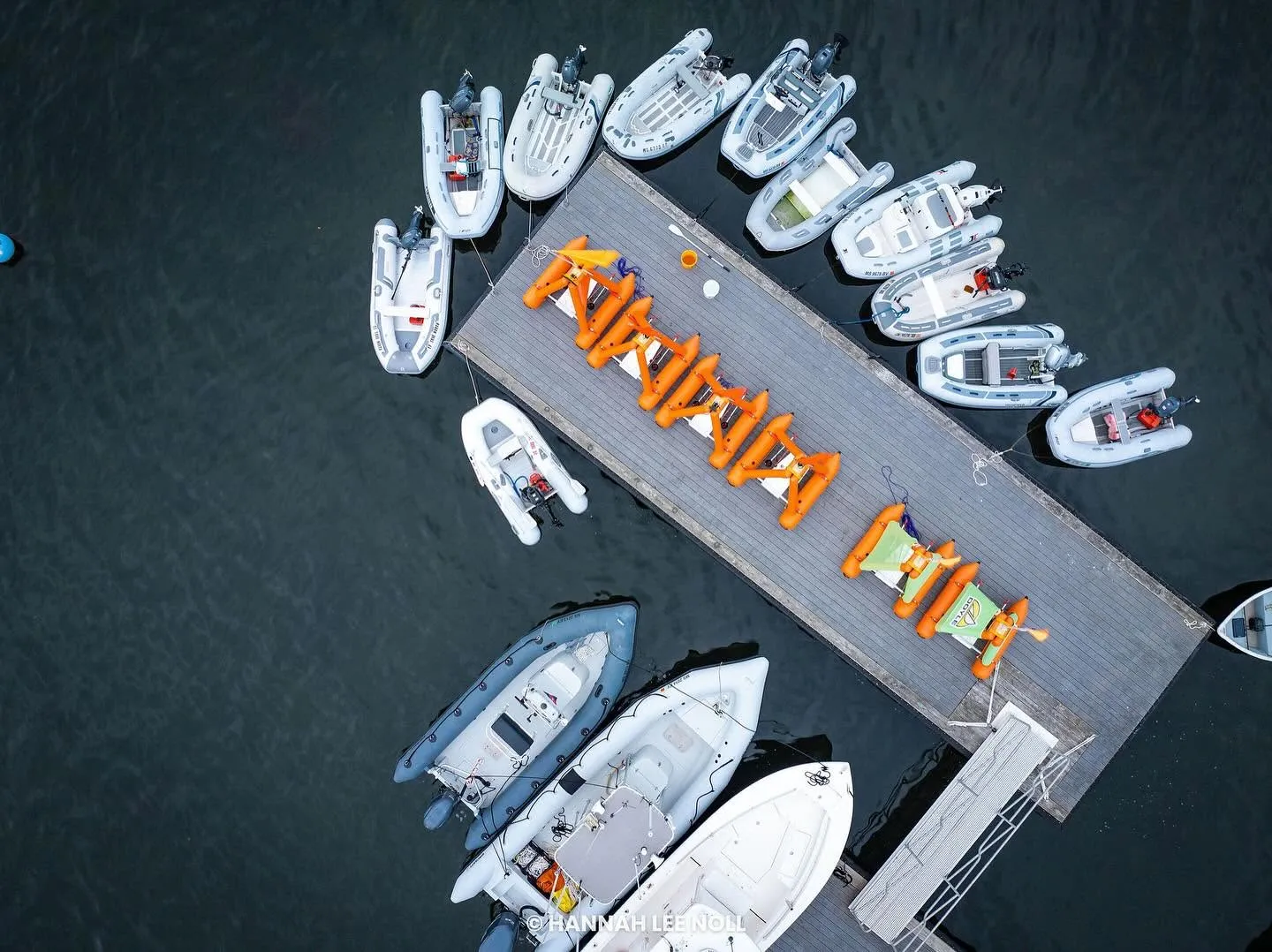
Robotic marks need a dedicated storage space. Depending on the manufacturer the size of space varies but, you need a safe, manageable area during the season—such as dock space, a shed, a container, or a trailer. Consider your storage layout: can the mark fit fully assembled, or does it need to be disassembled? If it must be taken apart, is that process quick and easy?
3. Does your club own the right type of RC boats to manage the marks?
Most race committee vessels work well with robotic marks: RIBs, center consoles, pontoons, and trawlers. However, consider boat size and mark design: are the atonomous marks towable behind your boats, or are they better suited to onboard transport?
4. Are you prepared to charge batteries at night?
Best practice across all robotic marks is to have a setup ready for safe, overnight charging. Specific charging protocols and power requirements vary by manufacturer, so ensure your club can accommodate them.
5. How is the cellular network in your area?
Talk to the manufacturers about your cellular network coverage. Do they have experience or knowledge of signal strength on your regular courses and can they provide alternate options, if your area as poor reception? This has a major impact on the control and command system you will need to safely operate your robotic marks remotely.
6. Can you organize a maintenance team?
Just like any other mechanical marine equipment, robotic marks will need upkeep, cleaning, fixes, and updates. Ensuring you have personnel to do such things will ensure your autonomous marks will last for years.
Part 2:
Key Questions to Ask the Manufacturer
Once you know your club is ready, use these questions to vet manufacturers and secure the best platform for your program.
Handling & On-Water Operations
1. Are the robotic marks easy to handle?
Robotic marks come in different shapes and sizes. Review each operational step:
-
-
- Assembly
- Battery handling (weight and charging type)
- On-land maneuvering
- Launching
- Engaging the motor
- On-water maneuvering
- Connection type
- Anchoring via hardware
- Retrieving
- Disassembly
2. Are the robotic marks towable?
Depending on where you set your courses, you may want to ensure the regatta mark bots is towable at high speeds behind powerboats or can be lifted easily onto the race committee boats at your club.
3. Seek understanding of the theory behind their app
Every manufacturer has their own app. Understanding the theory behind their app will help you set your courses efficiently. Can the app connect to other sailing apps, or is it even necessary to connect to the apps that you are currently using? Are there safety measures built into the app?
4. Does the robotic mark have wind or line measurement accessories?
Seek knowledge about what wind data comes with the robotic mark at cost, or as an additional cost. How easy is it to mount extras like flags, sponsor panels, or line measurement accessories?
5. How stable are the semi-autonomous buoys?
Most robotic marks are enabled for GPS station-keeping, GNSS. How do they react when the connection is lost? How stable are they in chop and wind? Depending on how the motors are mounted on the platform and how many motors the autonomous buoys have will have a direct impact on the stability of the mark, most important when you use the marks for starting.
6. What safety features do the marks feature?
What happens if the mark is flipped over? Do the motors stop? What happens if there happens to be a man on board? How safe is the person near the mark? Are the propellers in a cage? If the mark gets caught up, is there a large enough switch or button that someone can turn the autonoumous buoy off?
Reliability & Redundancy
1. How reliable are the robotic marks?
When the pressure is on, you need to know the marks will hold position and respond immediately when it is time to move. The best way to verify this is by speaking directly with other clubs that have real-world experience with the marks. Most manufacturers will gladly connect you with a comparable club for an honest review.
2. Does the robotic mark have a redundancy plan?
Most robotic marks are controlled primarily via a proprietary manufacturer app. What happens when the app connection drops? Some marks feature a physical backup button directly on the hardware. Additionally, ask: how easy is it to anchor the mark with traditional line and ground tackle if someone forgets to charge the battery?
3. How easy is it to exchange a battery or a motor on the water?
In the heat of a regatta, you do not want to abandon your course and switch back to traditional anchors. Ask the manufacturer whether you can swap out a depleted battery or failed motor directly on the water —and how difficult it is.
Maintenance, Spare Parts & Support
1. How easy is it to maintain the mark?
What is required to keep the mark running season after season? Most marks require very few updates, but you should ask about procedures for inflatable repairs, motor replacements, software updates, and general hardware maintenance. Is there an easy way to rinse out the motors?
2. When parts break, how difficult is it to swap them out?
Equipment will eventually experience wear and tear. Understanding how the mark is built helps you know whether repairs can be handled in-house: Can you swap a motor or replace a failing battery easily? Can you repair or replace the inflatable collar? How are the “brains” of the mark handled—is there an easy process to ship the core electronics back to the manufacturer for service or updates?
3. What are the manufacturer’s policies for spare parts?
Are common spare parts included in the initial shipment, or are they only shipped on demand? When hosting a major regatta, you need to keep your fleet operational on the water. How does the manufacturer ensure zero race downtime?
4. What can you expect from customer service?
Ask how often customers typically need to reach out for repairs or emergencies. When speaking with reference clubs, ask directly: How quickly did the company respond, and how long did it take them to resolve the issue?
Day-One Delivery, Costs & Specifications
1. What equipment is required to make the fleet operational on day one?
Beyond the buoys themselves, does the initial quotation include hand controllers, tablet hardware, multi-unit charging stations, beach dollies, and towing bridles—or are those optional add-ons?
2. Is on-site commissioning and volunteer training included?
Does a technician come to your club to train the sailing director and volunteers on the water, or is your team expected to learn through a PDF manual and video calls?
3. What type of battery does the robotic mark use, and why?
Ask what chemistry and form factor power the platform, and the engineering rationale behind that choice. Are they easy to lift, and does the manufacturer supply the batteries? Or accessories?
4. What are the mandatory annual software, licensing, or cellular fees?
Does the hardware require an annual subscription to remain functional, and what happens to the marks if the club skips a renewal cycle?
5. What is the warranty coverage, and what is the expected operational lifespan of the platform?
What components are protected against salt corrosion, water ingress, and electronic failure, and how many seasons should your club expect the hulls to remain in active service?